
Professional Garment Steaming
A softer touch. A beautifully finished garment.
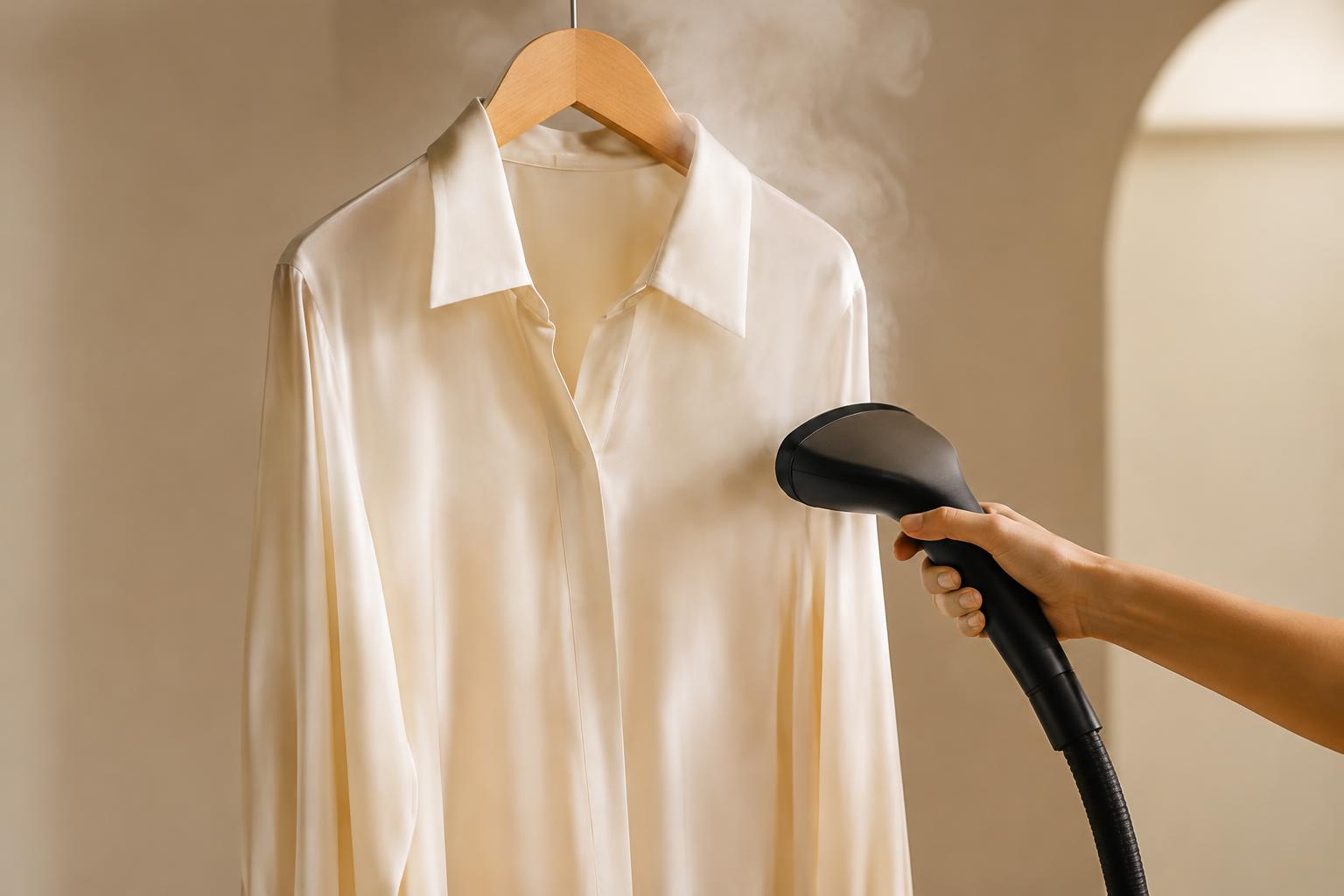
How steaming works
Heat and moisture, without the pressure.
Steam carries heat and moisture into fabric fibres. As fibres warm and absorb moisture, the bonds holding a wrinkle loosen, and the garment's own weight lets it fall smooth as it hangs.
At normal atmospheric pressure, steam is approximately 212°F (100°C). How much heat a garment actually receives depends on the equipment, the distance from the fabric, the duration and the technique. There is no universal safe steaming temperature for every fabric — which is why we inspect and, when needed, test first.
- 01
Inspect fabric and care instructions.
- 02
Photograph and document the garment.
- 03
Identify sensitive construction and embellishments.
- 04
Select suitable equipment.
- 05
Test an inconspicuous area when needed.
- 06
Steam using appropriate techniques.
- 07
Allow the garment to cool and dry.
- 08
Perform final inspection.
Benefits
Gentler on delicate fibres, avoids the shine and flattening direct heat can cause, keeps knits and textures lofty, and preserves a soft, natural drape.
Limitations
Steaming doesn't create sharp creases or crisp collars, may not fully remove deep wrinkles in heavy cotton, and some fabrics can water-spot or react to moisture.
Compare finishes
Steaming vs. Ironing vs. Pressing
- How it works
- Heated water vapor relaxes fibres while the garment hangs freely — no direct pressure.
- Best for
- Delicate fabrics, knits, silk, flowing dresses, textured weaves and quick refreshes.
- Finish
- Soft, natural drape. Doesn't create sharp creases.
- Limitations
- Won't produce crisp collars or trouser creases; heavy wrinkles in thick cotton may remain.
Steaming is quoted by garment and confirmed after inspection.